Как сделать merge git
Основы ветвления и слияния
Давайте рассмотрим простой пример рабочего процесса, который может быть полезен в вашем проекте. Ваша работа построена так:
Вы работаете над сайтом.
Вы создаете ветку для новой статьи, которую вы пишете.
Вы работаете в этой ветке.
В этот момент вы получаете сообщение, что обнаружена критическая ошибка, требующая скорейшего исправления. Ваши действия:
Переключиться на основную ветку.
Создать ветку для добавления исправления.
После тестирования слить ветку содержащую исправление с основной веткой.
Переключиться назад в ту ветку, где вы пишете статью и продолжить работать.
Основы ветвления
Предположим, вы работаете над проектом и уже имеете несколько коммитов.
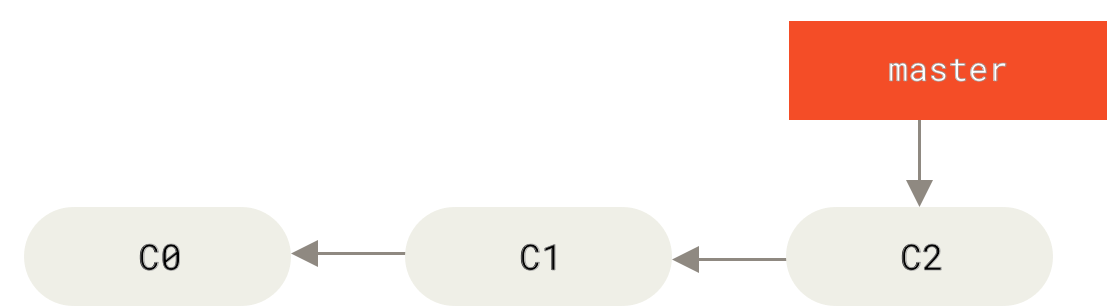
Это то же самое что и:
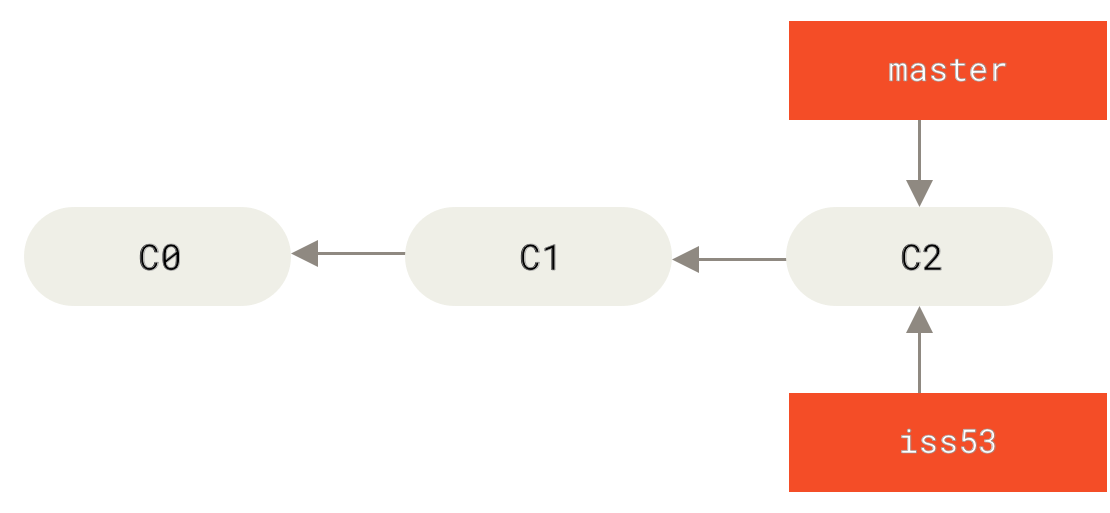
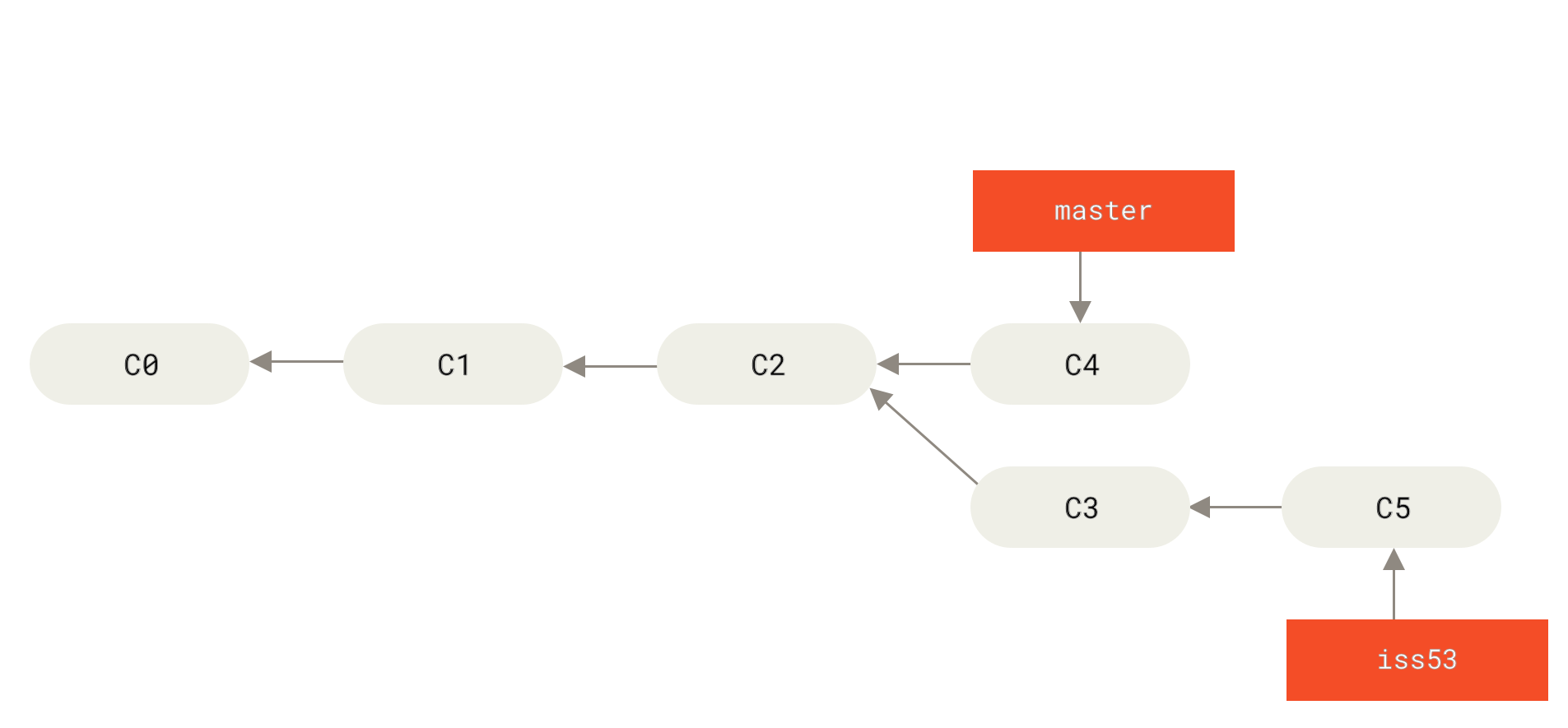
Вы работаете над своим сайтом и делаете коммиты. Это приводит к тому, что ветка iss53 движется вперед, так как вы переключились на нее ранее ( HEAD указывает на нее).
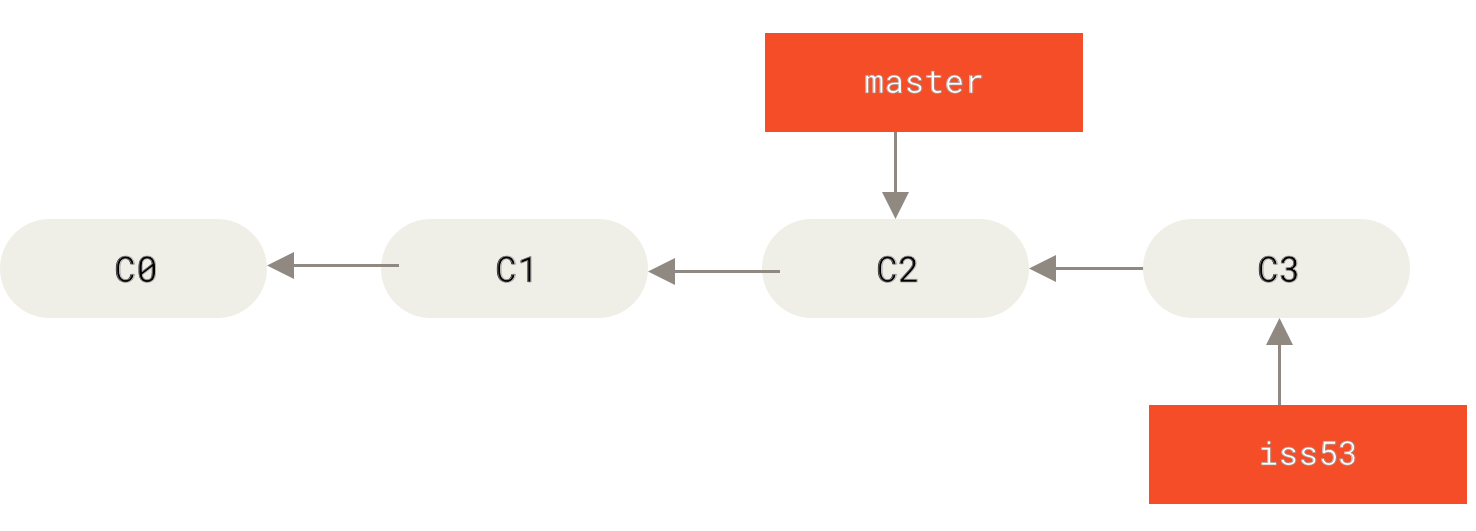
Но перед тем как сделать это — имейте в виду, что если рабочий каталог либо индекс содержат незафиксированные изменения, конфликтующие с веткой, на которую вы хотите переключиться, то Git не позволит переключить ветки. Лучше всего переключаться из чистого рабочего состояния проекта. Есть способы обойти это (припрятать изменения (stash) или добавить их в последний коммит (amend)), но об этом мы поговорим позже в разделе Припрятывание и очистка главы 7. Теперь предположим, что вы зафиксировали все свои изменения и можете переключиться на ветку master :
С этого момента ваш рабочий каталог имеет точно такой же вид, какой был перед началом работы над проблемой #53, и вы можете сосредоточиться на работе над исправлением. Важно запомнить: когда вы переключаете ветки, Git возвращает состояние рабочего каталога к тому виду, какой он имел в момент последнего коммита в эту ветку. Он добавляет, удаляет и изменяет файлы автоматически, чтобы состояние рабочего каталога соответствовало тому, когда был сделан последний коммит.
Теперь вы можете перейти к написанию исправления. Давайте создадим новую ветку для исправления, в которой будем работать, пока не закончим исправление.
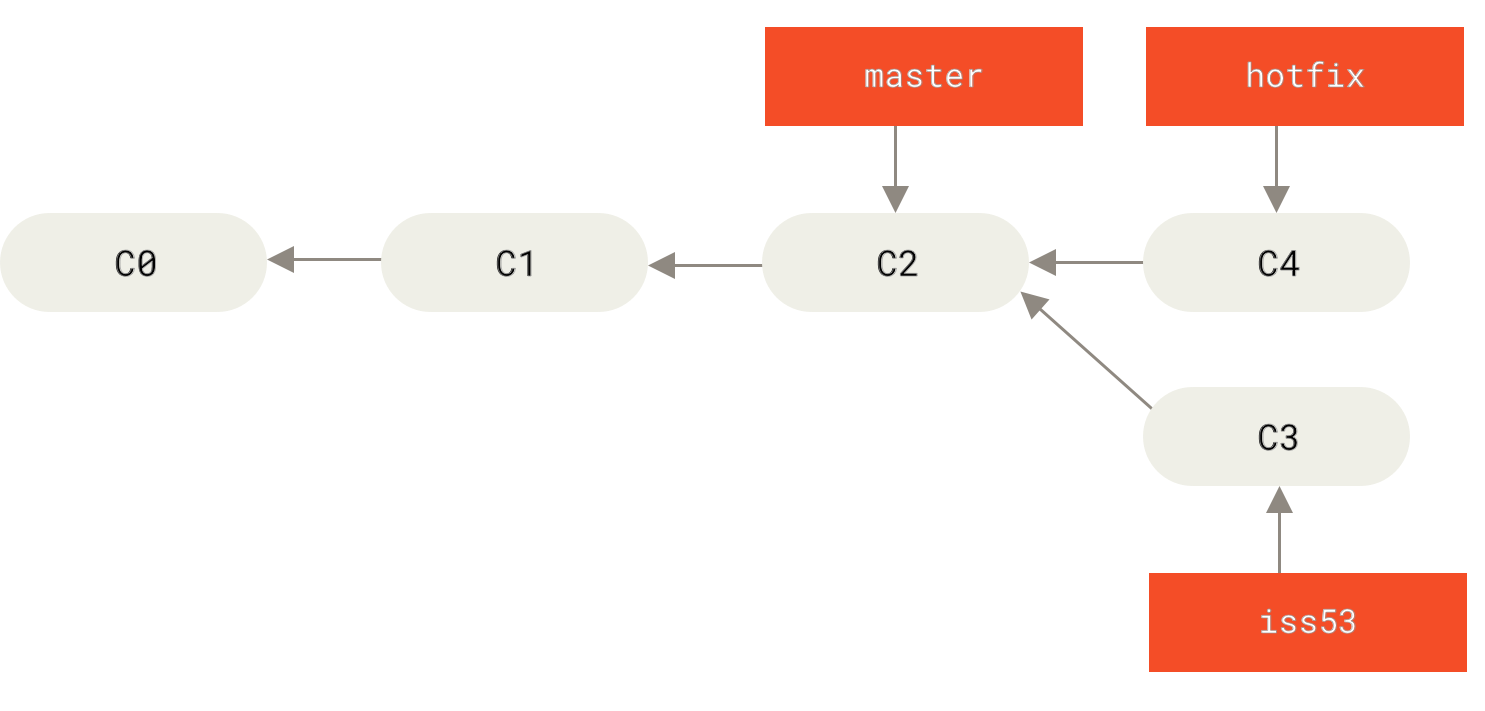
Вы можете прогнать тесты, чтобы убедиться, что ваше исправление делает именно то, что нужно. И если это так — выполнить слияние ветки hotfix с веткой master для включения изменений в продукт. Это делается командой git merge :
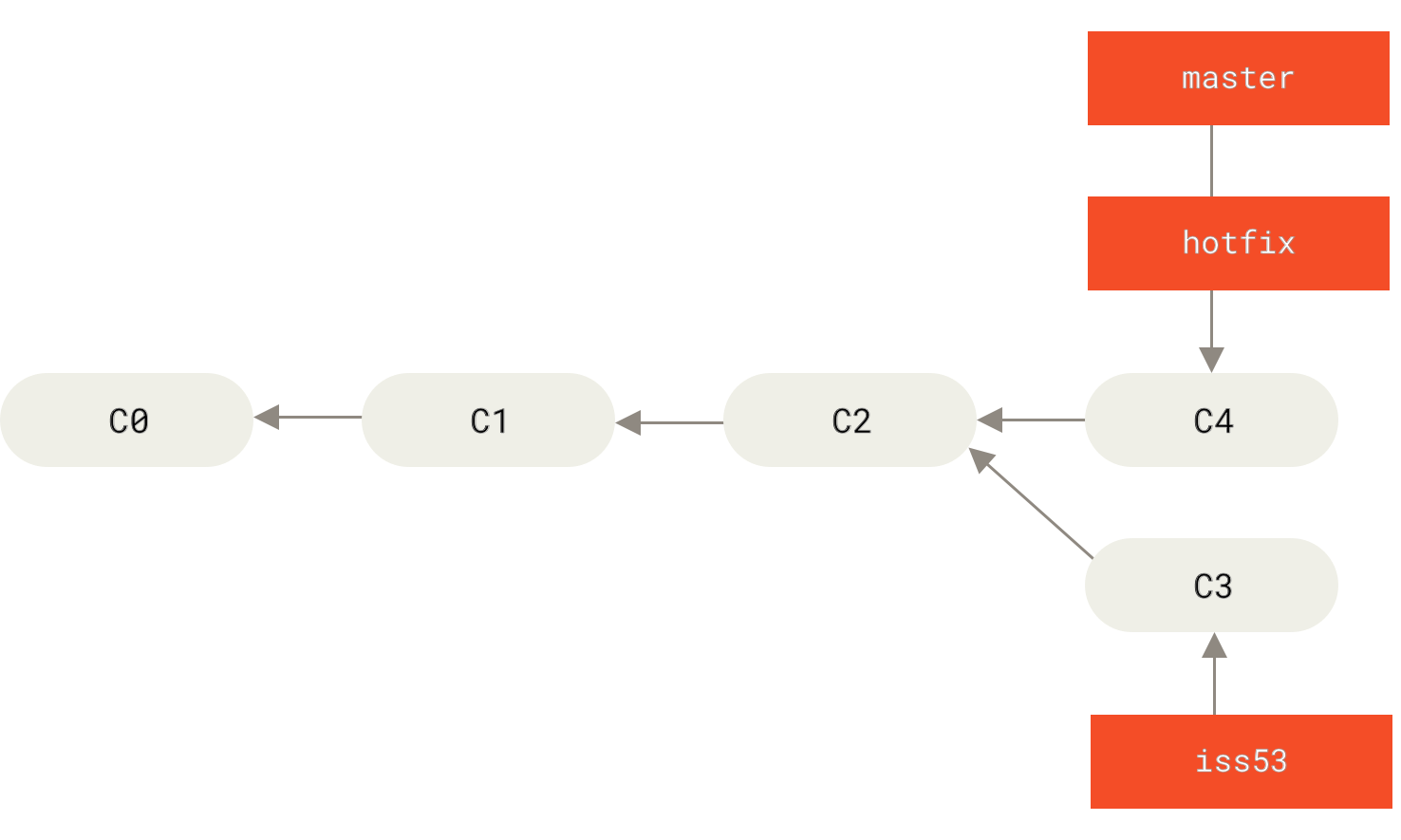
Теперь вы можете переключиться обратно на ветку iss53 и продолжить работу над проблемой #53:
Основы слияния
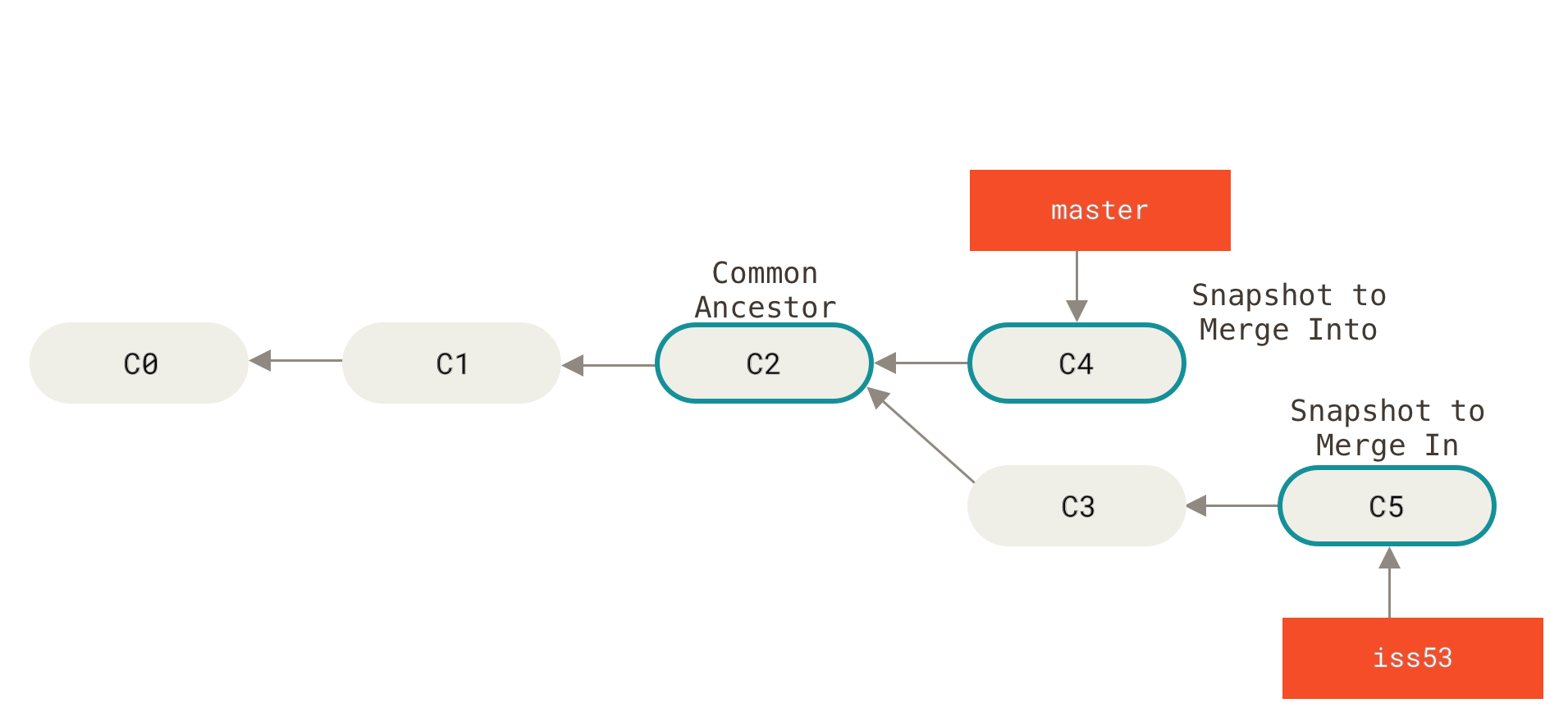
Вместо того, чтобы просто передвинуть указатель ветки вперёд, Git создаёт новый результирующий снимок трёхстороннего слияния, а затем автоматически делает коммит. Этот особый коммит называют коммитом слияния, так как у него более одного предка.
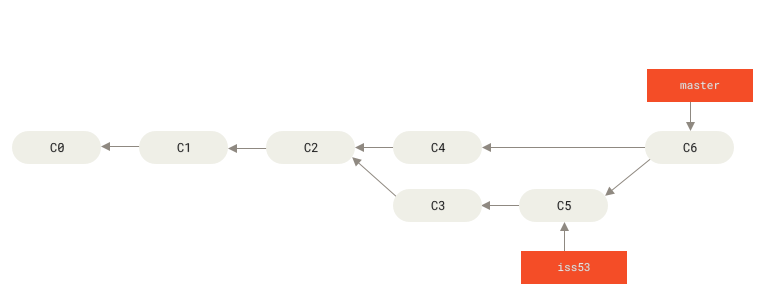
Теперь, когда изменения слиты, ветка iss53 больше не нужна. Вы можете закрыть задачу в системе отслеживания ошибок и удалить ветку:
Основные конфликты слияния
Git не создал коммит слияния автоматически. Он остановил процесс до тех пор, пока вы не разрешите конфликт. Чтобы в любой момент после появления конфликта увидеть, какие файлы не объединены, вы можете запустить git status :
Всё, где есть неразрешённые конфликты слияния, перечисляется как неслитое. В конфликтующие файлы Git добавляет специальные маркеры конфликтов, чтобы вы могли исправить их вручную. В вашем файле появился раздел, выглядящий примерно так:
Мы рассмотрим более продвинутые инструменты для разрешения сложных конфликтов слияния в разделе Продвинутое слияние главы 7.
Если это вас устраивает и вы убедились, что все файлы, где были конфликты, добавлены в индекс — выполните команду git commit для создания коммита слияния. Комментарий к коммиту слияния по умолчанию выглядит примерно так:
Если вы считаете, что коммит слияния требует дополнительных пояснений — опишите как были разрешены конфликты и почему были применены именно такие изменения, если это не очевидно.
Как сделать merge git
Check your version of git by running
SYNOPSIS
DESCRIPTION
Incorporates changes from the named commits (since the time their histories diverged from the current branch) into the current branch. This command is used by git pull to incorporate changes from another repository and can be used by hand to merge changes from one branch into another.
Assume the following history exists and the current branch is » master «:
Warning: Running git merge with non-trivial uncommitted changes is discouraged: while possible, it may leave you in a state that is hard to back out of in the case of a conflict.
OPTIONS
In addition to branch names, populate the log message with one-line descriptions from at most actual commits that are being merged. See also git-fmt-merge-msg[1].
Add a Signed-off-by trailer by the committer at the end of the commit log message. The meaning of a signoff depends on the project to which you’re committing. For example, it may certify that the committer has the rights to submit the work under the project’s license or agrees to some contributor representation, such as a Developer Certificate of Origin. (See http://developercertificate.org for the one used by the Linux kernel and Git projects.) Consult the documentation or leadership of the project to which you’re contributing to understand how the signoffs are used in that project.
Show a diffstat at the end of the merge. The diffstat is also controlled by the configuration option merge.stat.
Pass merge strategy specific option through to the merge strategy.
Verify that the tip commit of the side branch being merged is signed with a valid key, i.e. a key that has a valid uid: in the default trust model, this means the signing key has been signed by a trusted key. If the tip commit of the side branch is not signed with a valid key, the merge is aborted.
Turn progress on/off explicitly. If neither is specified, progress is shown if standard error is connected to a terminal. Note that not all merge strategies may support progress reporting.
Automatically create a temporary stash entry before the operation begins, record it in the special ref MERGE_AUTOSTASH and apply it after the operation ends. This means that you can run the operation on a dirty worktree. However, use with care: the final stash application after a successful merge might result in non-trivial conflicts.
By default, git merge command refuses to merge histories that do not share a common ancestor. This option can be used to override this safety when merging histories of two projects that started their lives independently. As that is a very rare occasion, no configuration variable to enable this by default exists and will not be added.
Set the commit message to be used for the merge commit (in case one is created).
The git fmt-merge-msg command can be used to give a good default for automated git merge invocations. The automated message can include the branch description.
Read the commit message to be used for the merge commit (in case one is created).
Allow the rerere mechanism to update the index with the result of auto-conflict resolution if possible.
Abort the current conflict resolution process, and try to reconstruct the pre-merge state. If an autostash entry is present, apply it to the worktree.
Forget about the current merge in progress. Leave the index and the working tree as-is. If MERGE_AUTOSTASH is present, the stash entry will be saved to the stash list.
Commits, usually other branch heads, to merge into our branch. Specifying more than one commit will create a merge with more than two parents (affectionately called an Octopus merge).
If no commit is given from the command line, merge the remote-tracking branches that the current branch is configured to use as its upstream. See also the configuration section of this manual page.
PRE-MERGE CHECKS
Before applying outside changes, you should get your own work in good shape and committed locally, so it will not be clobbered if there are conflicts. See also git-stash[1]. git pull and git merge will stop without doing anything when local uncommitted changes overlap with files that git pull/git merge may need to update.
To avoid recording unrelated changes in the merge commit, git pull and git merge will also abort if there are any changes registered in the index relative to the HEAD commit. (Special narrow exceptions to this rule may exist depending on which merge strategy is in use, but generally, the index must match HEAD.)
FAST-FORWARD MERGE
Often the current branch head is an ancestor of the named commit. This is the most common case especially when invoked from git pull: you are tracking an upstream repository, you have committed no local changes, and now you want to update to a newer upstream revision. In this case, a new commit is not needed to store the combined history; instead, the HEAD (along with the index) is updated to point at the named commit, without creating an extra merge commit.
TRUE MERGE
Except in a fast-forward merge (see above), the branches to be merged must be tied together by a merge commit that has both of them as its parents.
When it is not obvious how to reconcile the changes, the following happens:
The HEAD pointer stays the same.
The MERGE_HEAD ref is set to point to the other branch head.
Paths that merged cleanly are updated both in the index file and in your working tree.
MERGING TAG
When merging an annotated (and possibly signed) tag, Git always creates a merge commit even if a fast-forward merge is possible, and the commit message template is prepared with the tag message. Additionally, if the tag is signed, the signature check is reported as a comment in the message template. See also git-tag[1].
When you want to just integrate with the work leading to the commit that happens to be tagged, e.g. synchronizing with an upstream release point, you may not want to make an unnecessary merge commit.
HOW CONFLICTS ARE PRESENTED
During a merge, the working tree files are updated to reflect the result of the merge. Among the changes made to the common ancestor’s version, non-overlapping ones (that is, you changed an area of the file while the other side left that area intact, or vice versa) are incorporated in the final result verbatim. When both sides made changes to the same area, however, Git cannot randomly pick one side over the other, and asks you to resolve it by leaving what both sides did to that area.
By default, Git uses the same style as the one used by the «merge» program from the RCS suite to present such a conflicted hunk, like this:
The default format does not show what the original said in the conflicting area. You cannot tell how many lines are deleted and replaced with Barbie’s remark on your side. The only thing you can tell is that your side wants to say it is hard and you’d prefer to go shopping, while the other side wants to claim it is easy.
An alternative style can be used by setting the «merge.conflictStyle» configuration variable to «diff3». In «diff3» style, the above conflict may look like this:
HOW TO RESOLVE CONFLICTS
After seeing a conflict, you can do two things:
You can work through the conflict with a number of tools:
Use a mergetool. git mergetool to launch a graphical mergetool which will work you through the merge.
Look at the diffs. git diff will show a three-way diff, highlighting changes from both the HEAD and MERGE_HEAD versions.
will show diffs first for the HEAD version and then the MERGE_HEAD version.
Look at the originals. git show :1:filename shows the common ancestor, git show :2:filename shows the HEAD version, and git show :3:filename shows the MERGE_HEAD version.
EXAMPLES
Merge branches fixes and enhancements on top of the current branch, making an octopus merge:
Merge branch obsolete into the current branch, using ours merge strategy:
Merge branch maint into the current branch, but do not make a new commit automatically:
This can be used when you want to include further changes to the merge, or want to write your own merge commit message.
You should refrain from abusing this option to sneak substantial changes into a merge commit. Small fixups like bumping release/version name would be acceptable.
MERGE STRATEGIES
The ort strategy can take the following options:
This option forces conflicting hunks to be auto-resolved cleanly by favoring our version. Changes from the other tree that do not conflict with our side are reflected in the merge result. For a binary file, the entire contents are taken from our side.
This should not be confused with the ours merge strategy, which does not even look at what the other tree contains at all. It discards everything the other tree did, declaring our history contains all that happened in it.
This is the opposite of ours; note that, unlike ours, there is no theirs merge strategy to confuse this merge option with.
ignore-space-change ignore-all-space ignore-space-at-eol ignore-cr-at-eol
If their version only introduces whitespace changes to a line, our version is used;
If our version introduces whitespace changes but their version includes a substantial change, their version is used;
Otherwise, the merge proceeds in the usual way.
This runs a virtual check-out and check-in of all three stages of a file when resolving a three-way merge. This option is meant to be used when merging branches with different clean filters or end-of-line normalization rules. See «Merging branches with differing checkin/checkout attributes» in gitattributes[5] for details.
Disables the renormalize option. This overrides the merge.renormalize configuration variable.
This option is a more advanced form of subtree strategy, where the strategy makes a guess on how two trees must be shifted to match with each other when merging. Instead, the specified path is prefixed (or stripped from the beginning) to make the shape of two trees to match.
This can only resolve two heads using a 3-way merge algorithm. When there is more than one common ancestor that can be used for 3-way merge, it creates a merged tree of the common ancestors and uses that as the reference tree for the 3-way merge. This has been reported to result in fewer merge conflicts without causing mismerges by tests done on actual merge commits taken from Linux 2.6 kernel development history. Additionally this can detect and handle merges involving renames. It does not make use of detected copies. This was the default strategy for resolving two heads from Git v0.99.9k until v2.33.0.
The recursive strategy takes the same options as ort. However, there are three additional options that ort ignores (not documented above) that are potentially useful with the recursive strategy:
This can only resolve two heads (i.e. the current branch and another branch you pulled from) using a 3-way merge algorithm. It tries to carefully detect criss-cross merge ambiguities. It does not handle renames.
This resolves cases with more than two heads, but refuses to do a complex merge that needs manual resolution. It is primarily meant to be used for bundling topic branch heads together. This is the default merge strategy when pulling or merging more than one branch.
This is a modified ort strategy. When merging trees A and B, if B corresponds to a subtree of A, B is first adjusted to match the tree structure of A, instead of reading the trees at the same level. This adjustment is also done to the common ancestor tree.
With the strategies that use 3-way merge (including the default, ort), if a change is made on both branches, but later reverted on one of the branches, that change will be present in the merged result; some people find this behavior confusing. It occurs because only the heads and the merge base are considered when performing a merge, not the individual commits. The merge algorithm therefore considers the reverted change as no change at all, and substitutes the changed version instead.
CONFIGURATION
Specify the style in which conflicted hunks are written out to working tree files upon merge. The default is «merge», which shows a conflict marker, changes made by one side, a ======= marker, changes made by the other side, and then a >>>>>>> marker. An alternate style, «diff3», adds a ||||||| marker and the original text before the ======= marker.
In addition to branch names, populate the log message with the branch description text associated with them. Defaults to false.
In addition to branch names, populate the log message with at most the specified number of one-line descriptions from the actual commits that are being merged. Defaults to false, and true is a synonym for 20.
By adding a glob that matches the names of integration branches to this multi-valued configuration variable, the default merge message computed for merges into these integration branches will omit «into
» from its title.
An element with an empty value can be used to clear the list of globs accumulated from previous configuration entries. When there is no merge.suppressDest variable defined, the default value of master is used for backward compatibility.
The number of files to consider in the exhaustive portion of rename detection during a merge. If not specified, defaults to the value of diff.renameLimit. If neither merge.renameLimit nor diff.renameLimit are specified, currently defaults to 7000. This setting has no effect if rename detection is turned off.
Whether Git detects renames. If set to «false», rename detection is disabled. If set to «true», basic rename detection is enabled. Defaults to the value of diff.renames.
Whether Git detects directory renames, affecting what happens at merge time to new files added to a directory on one side of history when that directory was renamed on the other side of history. If merge.directoryRenames is set to «false», directory rename detection is disabled, meaning that such new files will be left behind in the old directory. If set to «true», directory rename detection is enabled, meaning that such new files will be moved into the new directory. If set to «conflict», a conflict will be reported for such paths. If merge.renames is false, merge.directoryRenames is ignored and treated as false. Defaults to «conflict».
Tell Git that canonical representation of files in the repository has changed over time (e.g. earlier commits record text files with CRLF line endings, but recent ones use LF line endings). In such a repository, Git can convert the data recorded in commits to a canonical form before performing a merge to reduce unnecessary conflicts. For more information, see section «Merging branches with differing checkin/checkout attributes» in gitattributes[5].
Whether to print the diffstat between ORIG_HEAD and the merge result at the end of the merge. True by default.
Гайд по Git : Часть 2 : Ветки и слияние веток
В этой статье разбираемся с понятием веток в git. Как смержить одну ветку в другую, и чем отличается Merge от Rebase.
Почти каждая система контроля версий (СКВ) в какой-то форме поддерживает ветвление. Используя ветвление, вы отклоняетесь от основной линии разработки и продолжаете работу независимо от неё, не вмешиваясь в основную линию. Во многих СКВ создание веток — это очень затратный процесс, часто требующий создания новой копии каталога с исходным кодом, что может занять много времени для большого проекта.
Ветки в Git, как и коммиты, невероятно легковесны. Ветка в Git — это простой перемещаемый указатель и ничего более. Вот почему многие фанаты Git повторяют мантру:
делай ветки сразу, делай ветки часто

Команда git branch позволяет не только создавать ветки, но и просматривать существующие. Ветка, на которой вы находитесь помечается звездочкой.
Сообщим Git, что хотим переключиться на другую ветку:

Чтобы понять, почему мы это называем ветками, переключимся на ветку main и сделаем еще один коммит там.
Напоследок вот совет, как создать новую ветку и переключиться на неё с помощью одной команды:
Merge
Мы уже знаем, как создавать ветки и коммитить наши изменения. Теперь надо понять, как объединять изменения из двух разных веток, после того как вы выполнили свою задачу в отдельной ветке.
Слияния создают особый вид коммита, который имеет сразу двух родителей. Коммит с двумя родителями обычно означает, что мы хотим объединить изменения из одного коммита с другим коммитом и всеми их родительскими коммитами.
Втащим все изменения из ветки newImage в ветку main :

А также посмотрим log, убедимся что появился новый коммит:
Rebase
Несмотря на то, что это звучит достаточно непонятно, преимущество rebase в том, что c его помощью можно делать чистые и красивые линейные последовательности коммитов. История коммитов будет чище, если вы применяете rebase.
Посмотрим, как это работает:
 Git дописал копию коммита C7 за коммитом C6 и перенес туда указатель
Удалим ветку bugFix и снова проверим log:
Напоследок вот вам шпаргалка по отличию Merge от Rebase:
 Сравнение Merge и Rebase
Заключение
Мы разобрались с ветками в Git и их слиянием. В идельном проекте все ветки стремятся влиться в одну.
Не забывайте создавать новые ветки от основной ветки разработки для каждой самостоятельной задачи.
Git для начинающих. Урок 9.
Слияния или мерджи веток
Видеоурок
Конспект урока
Краткое содержание урока, основные инструкции для командной строки, полезные ссылки и советы.
Подробнее о разных соглашениях мы поговорим во второй части курса.
Что такое мердж или слияние веток
Следует четко различать мердж своей ветки в мастер и мердж мастера в свою ветку.
Мердж ветки в мастер
Выполняется после завершения работы над своей веткой при помощи команды git merge. Чтобы вмерджить ветку в мастер, нужно сначала перейти в мастер, а затем выполнить git merge branch_name.
При этом возможны разные ситуации
Поговорим о них подробнее
Пока мы работали над веткой, в мастере не появилось новых коммитов
То есть мы создали ветку, поработали над ней, собрались заливать ее в мастер, а за это время новых коммитов там не появилось. Тогда слияние проходит так
Git понимает, что это новый код, который можно просто положить поверх старого. Это простая ситуация и git не задает никаких вопросов.
Не забудьте сразу запушить изменения, чтобы их увидели коллеги, и удалить локальную ветку header, если она больше не нужна.
Теперь другая ситуация.
Пока мы работали над веткой, в мастере появились коммиты от коллег
Сначала переключаемся на мастер
Почему «is up-to-date»? Потому что мы еще не сделали git pull. Делаем
Мерджим свою ветку в мастер
И не забываем запушить изменения
Что если сначала не подтягивать мастер, а смерджить свою ветку
Принципиально ничего не изменится, но лучше сначала сделать актуальной ветку мастер, а уже потом заливать свои изменения. А еще лучше держать актуальной свою ветку относительно мастера. Это значит, что стоит почаще подтягивать мастер в свою ветку. Таким образом мы в своей ветке будем работать с актуальным кодом и у нас меньше риска что-нибудь поломать. А если поломаем, то лучше чинить это в своей ветке, а не в мастере.
Как вмерджить мастер в свою ветку
Сначала идем в мастер, подтягиваем изменения с сервера, то есть делаем git pull. Затем переключаемся в свою ветку и делаем git merge master
Затем проверяем, что ничего не поломалось и продолжаем работать.
Мердж коммиты
Чем чаще мерджить между собой ветки, тем больше появляется так называемых мердж-коммитов. Такой коммит появляется каждый раз, когда мы подтягиваем мастер в свою ветку или сливаем свою ветку в мастер. Эти коммиты не хранят изменений, они хранят только факт мерджа одной ветки в другую.
Посмотрим список коммитов и найдем мердж-коммит с хэшем 051f754
Посмотрим его содержимое
То есть информация только о том, что в мастер была залита ветка news. Сами изменения в файлах, которые мы делали в ветке news, лежат в других коммитах.
Споры о том, есть польза от таких коммитов, ведутся годами и не закончатся, видимо, никогда.
Мерджи всегда проходят так гладко?
В этом уроке мы намеренно упрощали ситуацию и рассматривали случаи, когда наши коллеги делают изменения в других участках кода. То есть мы с ними даже не пересекались. В реальной жизни так происходит не всегда. Иногда мы правим одни и те же участки кода и тогда при их слиянии git не может понять, чей вариант правильный. Это называется возникновения конфликта.
Подробнее о конфликтах и их разрешении мы поговорим в следующем уроке.